Key Takeaways
- Battle Ground’s higher elevation keeps snow longer, increasing freeze-thaw damage.
- Water expands when frozen, silently prying shingles and loosening fasteners.
- February is ideal for inspection before spring rains expose hidden leaks.
- Warning signs: ceiling stains, lifted shingles, sagging gutters, peeling soffit paint.
- Prevention: proper attic insulation, ventilation, and annual inspections.
Winter in North Clark County differs from other parts of southwestern Washington. People living in Battle Ground tend to hold onto snow and ice well after downtown Vancouver has melted out. Colder pockets and higher elevations create winter landscapes that stay frosty for days or weeks after major snowstorms.
With February’s warmer afternoons, lingering ice and snow finally begins melting. Yet this relief can be deceptive. The subtle melt-refreeze cycle puts stress on residential roofing systems, quietly damaging shingles, gutters, and flashing. This hidden problem can escape attention until it leads to leaks and costly repairs.
Why Battle Ground Stays Icy Longer
Several factors help snow and ice cling to Battle Ground roofs long after lower elevations have thawed:
- Higher elevation keeps temperatures cooler, slowing the thaw.
- Rural microclimates with open fields and forests retain cold air longer.
- Tall conifers block direct sunlight, allowing snowbanks to linger.
- Distance from the Columbia River reduces warming urban heat island effects.
Downtown Vancouver warms faster because of denser buildings and traffic near the Columbia River. By contrast, rooftops in Battle Ground and surrounding North Clark County often remain blanketed in ice long after Vancouver has thawed. This extended exposure sets the stage for freeze-thaw cycles that weaken roofing materials.
The National Weather Service regularly documents temperature variations between urban and rural areas within the same county. These localized differences explain why Battle Ground homeowners experience more persistent winter weather than their neighbors just miles to the south.
How Silent Roof Damage Develops
During a typical Pacific Northwest winter, overnight temperatures dip below freezing while midday highs climb just enough to melt the snow surface. Snowmelt trickles down into crevices, finding its way under shingles or pooling in gutters. As evening chill arrives, that water refreezes, expanding in confined spaces.
Water expands when it freezes. This expansion creates pressure against roofing materials, working them apart gradually over days and weeks. The process repeats throughout winter:
- Melting during warmer daylight hours creates water runoff.
- Water seeps into gaps between shingles, around flashing, and into gutter joints.
- Refreezing after sunset turns water into ice.
- Expansion pries apart shingles, flashing, or gutter seams.
- Each cycle widens gaps and loosens fasteners.
These incremental expansions lift shingles, break down adhesive seals, and push flashing out of place. The resulting gaps may not show immediate signs of leaking. However, once ice finally melts, you could find obvious water intrusion or damage that becomes persistent. This is often called silent damage because it works unseen beneath snow cover.
Understanding Ice Dam Formation
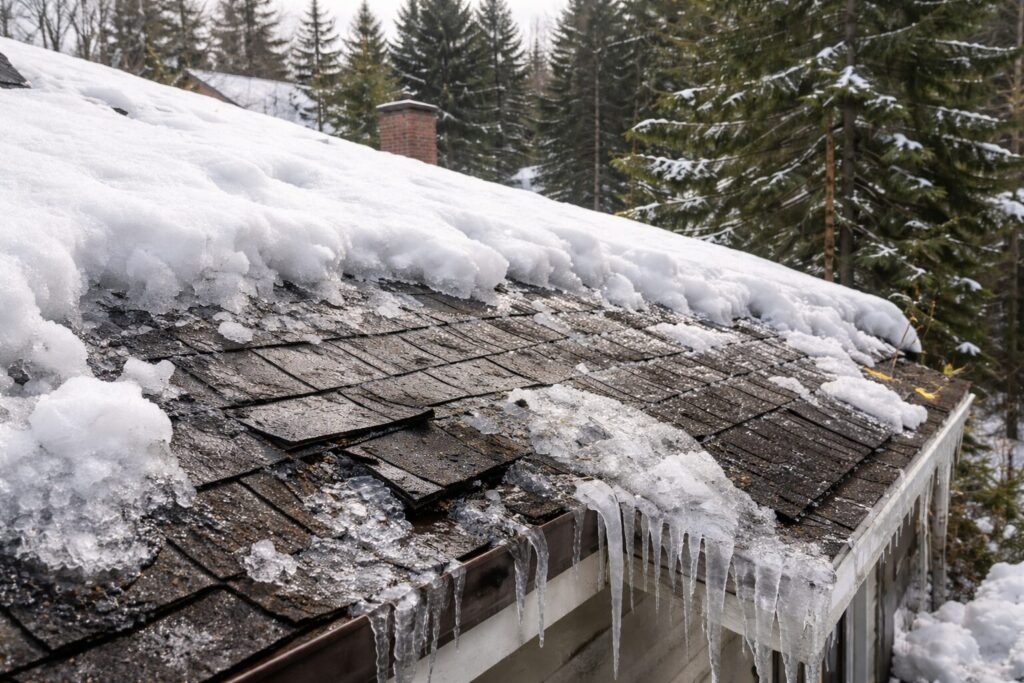
Ice dams form when heat escaping through your roof melts snow from underneath. The melted water flows down toward the eaves, where temperatures remain below freezing. There, it refreezes into a ridge of ice that blocks further drainage.
According to the Department of Energy, proper attic insulation and ventilation are the primary defenses against ice dams. When heat stays inside your living space rather than escaping into the attic, snow melts evenly from solar warmth rather than from below. This reduces the conditions that create ice dams.
Factors contributing to ice dam formation include:
- Insufficient attic insulation allowing heat to escape.
- Poor attic ventilation trapping warm air near the roof deck.
- Complex roof designs with valleys and dormers that trap snow.
- North-facing roof sections that receive less direct sunlight.
- Heavy snow accumulation that insulates the roof surface.
Ice in Valleys and Gutters
Some of the most vulnerable roof areas are valleys and gutters. Valleys where two roof planes meet direct water into channels. Gutters collect runoff at roof edges. While designed to move water efficiently, they become ice traps in freezing weather.
Key trouble areas include:
- Valleys where snowpack and ice accumulate, with freeze-thaw expansion cracking underlayment.
- Gutters and downspouts where refreezing ice adds weight, loosening brackets and hangers.
- Gutter seams where expanding ice widens tiny gaps into significant openings.
- Roof edges where ice dams prevent proper drainage.
- Areas around roof penetrations like vent pipes and skylights.
When snow lingers in Battle Ground for weeks, valleys and gutters experience repeated warming and cooling cycles, creating prime conditions for ice dams and the damage they cause.
Signs of Ice Dam Damage
Although invisible at first, ice dam damage leaves clues. After winter snows melt, do a thorough inspection looking for these indicators:
- Water stains on ceilings, often appearing as brownish or yellowish marks.
- Lifted or curled shingles from repeated ice expansion underneath.
- Gutter separation showing signs of sagging, pulling away from fascia, or loosened hangers.
- Flashing gaps around vent pipes, skylights, or chimneys where metal has shifted.
- Peeling paint on soffits or fascia boards indicating moisture penetration.
- Icicles forming along roof edges, which indicate heat loss and potential ice dam conditions.
- Granule accumulation in gutters suggesting shingle wear from ice movement.
Keep in mind that water can travel along roof decking before appearing in your living space. A leak might show up in your ceiling far from the actual point of entry on the roof. If you find any of these signs, schedule a professional inspection. Many homeowners in North Clark County prefer bringing in a local roofing contractor in Vancouver WA or roof repair specialist in Battle Ground who understands regional weather patterns.
Why February Matters for Inspection
Late winter is critical for roof checks. By February, Battle Ground snow typically begins its final retreat. That’s when it’s easiest to spot hidden damage without waiting for spring rainfall to expose serious leaks.
Checking now helps you:
- Catch leaks before spring rains arrive in earnest.
- Avoid secondary damage like mold growth, compromised insulation, and structural decay.
- Schedule repairs early before spring demand increases contractor availability.
- Document damage while evidence remains visible.
- Address problems before they compound with additional moisture exposure.
Think of a roof inspection like a medical checkup. Small problems are far simpler to address when caught early. A lifted shingle costs far less to fix than replacing water-damaged decking and insulation.
A Thorough Inspection Checklist
Performing a basic assessment guides you in deciding whether to call a professional. Work through this checklist systematically:
Exterior Assessment
- Walk around your home and scan each side of the roof for missing or lifted shingles.
- Check for visible gaps in flashing around chimneys, vents, and skylights.
- Look for sagging sections of gutters or misaligned seams.
- Note any areas where shingles appear darker, which may indicate moisture retention.
- Examine fascia boards and soffits for peeling paint or soft spots.
Gutter and Drainage Review
- Verify downspouts are securely attached and properly directing water away from foundation.
- Check for debris accumulation from leftover ice or winter storms.
- Look for bent or crushed gutter sections from ice weight.
- Ensure gutter slope allows proper drainage toward downspouts.
Interior Attic Check
- Look for damp spots, water stains, or discoloration on rafters and decking.
- Check insulation for wet areas or compression.
- Smell for musty odors that indicate mold growth.
- Examine areas directly below valleys and roof penetrations.
- Note any daylight visible through the roof, indicating gaps.
If you see anything suspicious, contact a roofing contractor in Vancouver WA or schedule an inspection to ensure your home is protected before spring rains begin.
Preventing Winter Damage Next Season
While you cannot control weather, you can reduce future freeze-thaw impact through proper preparation and maintenance:
Fall Preparation
- Clean gutters thoroughly so water flows freely before freezing temperatures arrive.
- Trim tree branches that overhang the roof to reduce debris and shading.
- Inspect and repair flashing around chimneys, vents, and skylights.
- Check attic insulation levels and add more if needed.
Attic Improvements
- Ensure adequate insulation to keep heat inside living spaces.
- Verify proper ventilation with intake vents at soffits and exhaust vents near the ridge.
- Seal air leaks around light fixtures, plumbing stacks, and attic access points.
- Consider adding baffles to maintain airflow at eaves.
Ongoing Maintenance
- Schedule professional roof inspections annually or after major weather events.
- Address minor repairs promptly before they become major problems.
- Keep records of maintenance and repairs for future reference.
- Monitor weather forecasts to anticipate potential ice dam conditions.
Prevention is always easier than scrambling to fix leaks in a cold, soggy attic. The FEMA recommends proactive home maintenance as a key component of disaster preparedness, including addressing roof vulnerabilities before winter weather arrives.
What Sets North County Apart
Properties in North Clark County face added roofing challenges because of microclimates. Lingering snowdrifts on your roof may not melt with a single warm day. Tree lines blocking sunshine combined with overnight lows keep freeze-thaw cycles active well into late February or even early March.
Throughout cold snaps, roof materials perpetually expand and contract. Ridges of ice around skylights and dormers add stress on shingles and seals. Even metal flashing expands and contracts at different rates than asphalt shingles, potentially weakening seals over time.
The rural character of much of Battle Ground means homes often sit among tall trees that shade roofs for much of the day. While beautiful, this tree cover extends snow retention and reduces natural melting. Homeowners in these settings should pay particular attention to north-facing roof sections and areas shaded by evergreens.
Taking Action Now
Winter roof damage may be quiet, but responding does not have to be complicated. Taking action now saves larger expenses later:
- Schedule a roof inspection whether you spot trouble or just want peace of mind.
- Document any damage with photos before making repairs.
- Seek expert advice from a roofing contractor in Vancouver WA about repair options and material choices.
- Learn about local weather patterns from the National Weather Service to anticipate future conditions.
- Create a maintenance calendar to stay ahead of seasonal roof care needs.
The best approach balances cautious observation with proactive professionalism. Do not wait for water dripping through your ceiling to address potential problems.
Looking Ahead to Spring
You cannot stop ice from forming in valleys and gutters, but you can limit its capacity to cause destruction. Thorough fall preparation, prompt winter maintenance, and timely inspection once snow disappears provide a comprehensive way to guard against silent freeze-thaw damage.
The roof over your head protects everything inside your home. By focusing on roof repair in Battle Ground WA or checking potential problem areas with a professional, you protect your investment and ensure safety and comfort for your household. February offers the ideal window to assess winter damage and plan repairs before spring rains test your roof’s integrity.
Frequently Asked Questions
What is freeze-thaw damage?
Water seeps into small gaps in roofing materials, freezes overnight, and expands. This repeated cycle loosens shingles, breaks seals, and creates entry points for leaks.
Why does Battle Ground get more ice damage than Vancouver?
Higher elevation and rural microclimates keep temperatures colder longer. Snow lingers on Battle Ground roofs for weeks after Vancouver has thawed.
How can I tell if my roof has ice dam damage?
Look for water stains on ceilings, lifted or curled shingles, gutters pulling away from fascia, and peeling paint on soffits or eaves.
When should I schedule a roof inspection?
February is ideal. Snow is melting, damage is visible, and you can schedule repairs before spring rains and peak contractor demand.
How do I prevent freeze-thaw damage?
Ensure proper attic insulation and ventilation, clean gutters before winter, and schedule annual professional inspections.
Now that the snow is melting, is your roof still sound? Book a Battle Ground roof inspection today.