Key Takeaways
- Attic condensation forms when warm indoor air meets cold roof surfaces—often mistaken for leaks.
- Older East Portland homes lack modern ventilation, making them highly susceptible.
- Condensation: broad patches on decking. Leaks: trails from specific entry points.
- Solutions: balanced ventilation, vapor barriers, air sealing, exterior-vented exhaust fans.
- Persistent moisture may require roof replacement with modern ventilation systems.
Many older homes throughout East Portland, Gresham, Clackamas, and Milwaukie stand as testaments to the region’s architectural heritage. These houses feature distinctive rooflines, original woodwork, and vintage charm that newer construction cannot replicate. Yet along with their beloved character, they carry a hidden issue in the attic: condensation. Known as “attic sweat,” this phenomenon causes confusion, leading many homeowners to mistake it for a roof leak.
Attic condensation poses a real risk to your roofing system and can threaten historical details you want to preserve. With solutions ranging from upgraded ventilation to proper vapor barriers, you can address moisture while maintaining East Portland’s unique older residences for future generations.
Understanding Attic Condensation
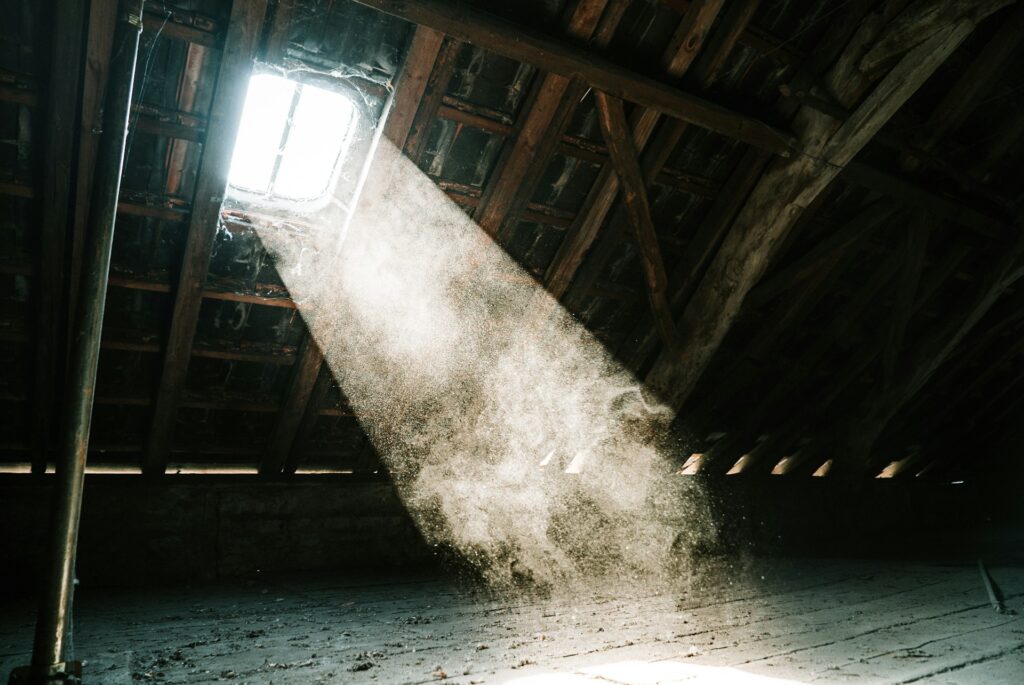
When moisture-laden air in the attic encounters cooler surfaces like rafters or roof decking, water vapor condenses into liquid droplets. This often produces the appearance of a leak, even though there may be no damage to shingles or the roof membrane. The process follows basic physics: warm air holds more moisture than cold air, and when that warm air contacts a cold surface, it releases its moisture as condensation.
In traditional homes lacking modern venting, this phenomenon is particularly common during colder months when the temperature differential between indoor and outdoor spaces is greatest. It sometimes appears as harmless droplets on nails or rafters, but over time, persistent moisture can lead to wood rot, mold growth, and structural issues that are expensive to repair. Understanding the underlying causes is essential for preventing long-term damage.
Why Older East Portland Homes Are Susceptible
Many Eastside homes built 50 or more years ago were constructed with limited or outdated ventilation systems. Building codes and construction practices have evolved substantially since then. Though these structures have served generations well, their attics often are not equipped to handle today’s moisture load from modern appliances, tighter windows, and different living patterns.
In older neighborhoods throughout Gresham, Clackamas, and Milwaukie, you will frequently find minimal intake vents, insufficient exhaust points, or blocked airflow pathways that prevent proper moisture management.
Common contributing factors include:
- Aging materials that have become more porous over decades and absorb moisture readily.
- Insulation gaps where warm, humid indoor air rises into attic spaces.
- Limited vent designs that do not provide balanced airflow between intake and exhaust.
- Bathroom fans and dryer vents that may improperly terminate in the attic rather than outside.
- Original construction that predates modern understanding of building science.
- Additions or renovations that disrupted original ventilation pathways.
- Accumulated debris in vents from years of leaves, bird nests, or insulation displacement.
The Department of Energy emphasizes that proper ventilation is essential for maintaining indoor air quality and preventing moisture problems in homes. Their guidance notes that natural ventilation is often insufficient for modern living conditions.
Condensation vs. Leaks: How to Tell the Difference
Spotting water stains in your attic can stir alarm. The immediate question: is this a real roof leak or condensation? Distinguishing between the two saves time, worry, and money on unnecessary repairs.
Key differences to observe:
- Pattern of stains: Condensation appears in broad patches across roof decking undersides, often concentrated around nails where metal conducts cold into the attic. Leaks typically follow a single trail from a specific entry point and may show discoloration running downhill along rafters.
- Timing of appearance: Attic condensation usually becomes most noticeable when outdoor temperatures dip significantly and interior heat meets cold roof surfaces. It often appears during cold snaps or when heating systems run frequently. Leaks correlate with rain events rather than temperature changes.
- Weather correlation: True roof leaks worsen during rain or snowmelt. Condensation problems often appear during dry but cold weather when no precipitation has occurred.
- Roof condition: If exterior roofing appears in good condition with no missing shingles, gaps in flashing, or visible damage, condensation might be the leading suspect rather than water intrusion from outside.
- Location patterns: Condensation often affects nail heads, metal components, and the north-facing roof sections where surfaces stay coldest. Leaks center around penetrations, valleys, and flashing locations.
A thorough inspection by a qualified roofing contractor in Portland, OR ensures there is no underlying damage and helps determine whether the moisture source is internal condensation or external water intrusion.
Red Flags Indicating Attic Condensation Problems
Prolonged moisture exposure can threaten your attic’s structural integrity. Recognizing these signs early allows for intervention before damage becomes severe:
- Water stains and discoloration along rafters, attic floors, or upper walls indicating repeated moisture exposure.
- Musty odors that smell like damp cardboard when entering the attic space.
- Visible mold or mildew with black, green, or white fuzzy spots on wood surfaces.
- Peeling paint on exterior eaves and soffits from moisture seeping outward through walls.
- Fluctuating indoor temperatures suggesting poor attic insulation and ventilation performance.
- Frost forming on the underside of roof sheathing during cold weather.
- Rusted nail heads or metal components in the attic space.
- Compressed or water-damaged insulation that has lost effectiveness.
- Wood that feels soft or spongy when pressed, indicating early rot.
According to the EPA’s guidance on mold, controlling moisture is the key to preventing mold problems in buildings. Attic condensation provides the exact conditions mold needs to thrive: moisture, organic material like wood, and lack of air circulation.
The Science of Moisture Movement
Understanding how moisture moves through your home helps explain why older homes face condensation challenges. Warm air naturally rises, carrying water vapor from cooking, bathing, breathing, and other daily activities upward through the house.
In modern construction, vapor barriers and air sealing prevent this moisture-laden air from reaching the attic. Older homes typically lack these features, allowing warm humid air to migrate into attic spaces through:
- Gaps around light fixtures and electrical boxes.
- Spaces around plumbing penetrations.
- Attic access hatches without proper weatherstripping.
- Gaps where walls meet ceilings.
- Recessed lighting fixtures that create direct pathways.
Once this warm, moist air enters the cold attic space, it releases its moisture onto the coldest surfaces available, primarily the underside of roof sheathing and exposed nails.
Modern Solutions for Historic Homes
Owners of vintage Eastside homes may hesitate to embrace new technologies for fear of losing historic charm. Fortunately, modern ventilation systems can work with older architecture, preserving aesthetics while addressing moisture control effectively.
Balanced Ventilation Systems
Effective attic ventilation aims for balanced intake and exhaust. Fresh air enters lower at the eaves while warm, humid air exits near the roof’s peak. This creates continuous airflow that carries moisture out of the attic before it can condense.
Ventilation options compatible with older homes include:
- Soffit vents installed under roof overhangs to draw in fresh air while blending with existing design elements.
- Ridge vents at the roof’s apex that release hot, moist air with low-profile offerings maintaining the roofline silhouette.
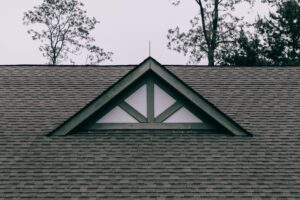
- Gable vents providing classic louvered options that match period aesthetics.
- Powered attic ventilators for situations where passive ventilation proves insufficient.
Vapor Barriers and Air Sealing
Vapor barriers help keep interior moisture from creeping into attic spaces in the first place. When installed correctly on the warm side of insulation, they prevent condensation by blocking warm, moist air migration before it reaches cold surfaces.
Effective moisture control methods include:
- Heavy-duty plastic sheeting installed on the attic floor to minimize water vapor infiltration.
- Air sealing around penetrations, light fixtures, and attic access points.
- Weatherstripping on attic hatches and doors.
- Insulation upgrades with fiberglass, cellulose, or spray foam that reduce condensation risk while managing temperature swings.
- Ensuring bathroom exhaust fans and dryer vents terminate outside the building rather than into attic space.
Preserving Architectural Character
Finding a professional roofing contractor experienced with older roof structures is essential for maintaining historic character. Skilled contractors understand period-accurate renovations, minimally invasive techniques that preserve original materials, and methods for maintaining structural integrity while adding modern performance features.
When Condensation Signals Need for Roof Replacement
In some cases, persistent attic condensation indicates your roof is nearing the end of its useful lifespan. Worn shingles, rotting sheathing, or sagging sections might mean addressing ventilation alone will not solve the problem.
Signs that condensation issues may require comprehensive roof replacement:
- Persistent moisture problems even after ventilation and insulation improvements.
- Recurring mold growth pointing to significant and ongoing moisture infiltration.
- Advanced shingle degradation with curling, buckling, or missing pieces.
- Structural weakness shown by depressed sections or uneven sagging.
- Rotted roof sheathing that has lost structural integrity.
- Previous repairs that have failed to resolve ongoing issues.
By upgrading the entire roofing system, you can incorporate contemporary ventilation, robust insulation, and vapor barriers that merge with your home’s historical architecture while providing decades of reliable protection.
Immediate Steps for Protecting Your Attic
If you suspect attic condensation, take these initial actions before scheduling a professional inspection:
- Check attic access points to ensure bathroom exhaust fans and dryer vents discharge outside the building, not into the attic space.
- Inspect existing vents for blockages from debris, bird nests, or displaced insulation covering soffit vents.
- Evaluate insulation levels and condition, noting uneven, patchy, wet, or compressed areas.
- Observe seasonal patterns and document when moisture or musty odors appear relative to weather conditions.
- Look for daylight entering through gaps that would also allow warm air to escape into the attic.
- Check weatherstripping on attic access hatches and doors.
For additional guidance on ventilation best practices and their role in home energy efficiency, visit the Department of Energy ventilation resources.
Working with the Right Roofing Expert
Authentic preservation of East Portland’s architectural charm requires a roofing partner who appreciates your home’s historical narrative while delivering modern solutions. The right contractor should demonstrate several qualities:
- Conduct thorough inspections that review attic insulation, ventilation pathways, and moisture patterns.
- Present tailored options that maintain your home’s distinctive style while solving moisture problems.
- Respect your home’s character by preserving decorative fascia, original trim, and period-appropriate materials.
- Guide you through building codes applicable in Gresham, Milwaukie, Clackamas, and other historic districts.
- Provide clear explanations of findings and recommended solutions.
- Offer warranties on both materials and workmanship.
Protect Your Historic Investment
If you are ready to maintain a comfortable, healthy home and prevent attic sweat from causing ongoing damage, schedule an attic ventilation and roof health assessment. Addressing condensation at the source preserves the charm, artistry, and financial value of your residence while protecting against wood rot, mold growth, and structural deterioration.
A professional roofing contractor in Portland, OR can identify the difference between condensation and genuine leaks, recommend efficient upgrades appropriate for older construction, and perform roof replacement if necessary.
By taking proactive steps toward ventilation upgrades, insulation improvements, and mindful maintenance, you secure your property’s place in the next chapter of Portland’s rich heritage while ensuring comfort and protection for your family.
Frequently Asked Questions
How do I tell if it’s condensation or a roof leak?
Condensation appears as broad moisture patches across decking, often on nail heads. Leaks follow specific trails from entry points and worsen during rain.
Why do older homes have more attic condensation?
Pre-1970s construction often lacks adequate ventilation and vapor barriers. Modern living adds moisture from showers, cooking, and tight windows that older designs cannot handle.
What causes attic condensation in winter?
Warm, moist air rises from living spaces into the cold attic. When it contacts cold roof sheathing, water vapor condenses into liquid droplets.
How do I fix attic condensation?
Install balanced soffit-to-ridge ventilation, add vapor barriers, seal air leaks around fixtures, and ensure bathroom fans vent outside—not into the attic.
Can condensation damage my roof?
Yes. Persistent moisture causes wood rot, mold growth, insulation damage, and structural deterioration. Address it before minor issues become major repairs.
Protect your historic investment. Schedule an attic ventilation and roof health check-up today.